When families compare judo clubs, tournament medal counts are often one of the first things they notice. Medals matter. They reflect preparation, execution, and an athlete’s ability to perform under pressure.
But total medal counts do not always tell the entire story.
A large dojo that sends dozens of competitors to a tournament naturally has more opportunities to collect podium finishes than a smaller program sending a focused group of athletes. That does not make one approach better than another. It simply means competition results deserve context.
For Kensei Judo, that context is important.
Kensei’s growing external competition team has produced meaningful results across Northern California, Hawaii, and national-level events while competing against athletes from established judo programs. Rather than focusing only on the number of medals collected, Kensei’s progress can also be viewed through a different lens:
How well are athletes being prepared when they step onto the mat?
For parents and athletes searching for competitive judo in San Jose, that may be one of the most important questions to ask.
Looking Beyond Total Medal Counts
Raw medal totals are useful, but they are heavily influenced by participation.
Consider a simple example. If one club sends 40 athletes to a tournament and another sends 10, the larger team has four times as many opportunities to earn medals.
That does not diminish the accomplishments of larger programs. Strong Bay Area clubs provide deep training groups, experienced competitors, and valuable competition for everyone involved.
It does mean, however, that medal totals should be considered alongside the number of athletes competing.
A focused competition team can therefore be evaluated not only by how many medals it earns, but by how consistently its athletes compete, improve, win matches, and reach the podium relative to the opportunities they have.
That perspective helps explain Kensei’s recent competitive growth.
Verified External Competition Results
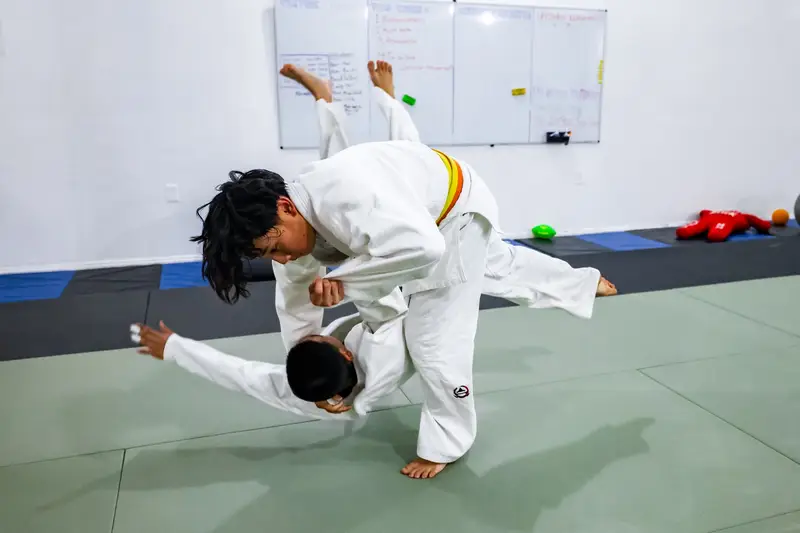
Public Smoothcomp placement records from eleven outside tournaments verify 98 podium finishes for Kensei athletes:
- 30 gold medals
- 37 silver medals
- 31 bronze medals
Only official 1st, 2nd, and 3rd-place finishes are counted. Fourth-place and lower results, match wins that did not produce a medal, and Kensei-hosted developmental shiai are excluded.
That last point matters. Smoothcomp’s club-level medal total can include events Kensei hosted. The 98-podium figure above is outside competition only — results earned at tournaments organized by other clubs and organizations.
These results do not prove that Kensei is the number-one or most efficient dojo in the Bay Area. Complete competitor-entry data from every club would be required to make that claim responsibly.
What the record does show is a competition program that has kept traveling, kept entering serious events, and kept returning with verified placements across novice, standard, and championship divisions.
How the Record Has Grown
An earlier public summary on this site covered only five tournaments and reported 19 podiums. That snapshot was a conservative minimum, not the full Smoothcomp record.
The current count includes every external tournament in Kensei’s supplied Smoothcomp competition history with published placement results, through the 36th Annual Bojuka Judo Invitational on .
The story underneath those medals is not a single breakout weekend. It is two years of Bay Area judo tournaments, a national championship, and one Hawaii trip, with juniors, teens, and seniors all represented.
Competition Timeline
Events are listed in chronological order. Medal totals are Kensei podium finishes at that tournament: gold (1st), silver (2nd), and bronze (3rd). Athletes who placed in more than one division are counted once per official placement.
Participation figures count each Kensei athlete listed in the published results once per tournament, even when that athlete entered multiple divisions. The podium rate is the share of those listed athletes who earned at least one official 1st, 2nd, or 3rd place—not the number of medal placements divided by division entries.
2024 San Jose Open
— San Jose.
Kensei results: Gold 0 · Silver 3 · Bronze 1 · Total 4.
Kensei athletes listed: 19 · Podium athletes: 4 of 19 (21.1%).
This opening event in the audited timeline produced four podium finishes across junior, juvenile, and senior divisions.
2025 Palo Alto Judo Tournament
.
Kensei results: Gold 1 · Silver 2 · Bronze 2 · Total 5.
Kensei athletes listed: 9 · Podium athletes: 5 of 9 (55.6%).
The gold came in senior black-belt competition. The other placements included senior novice and junior divisions.
2025 Champions Cup
.
Kensei results: Gold 2 · Silver 1 · Bronze 1 · Total 4.
Kensei athletes listed: 9 · Podium athletes: 4 of 9 (44.4%).
Youth athletes earned both gold medals, while two senior novice athletes completed the podium count.
America’s Cup Judo Championships: Hawaii Edition
— Hawaii.
Kensei results: Gold 0 · Silver 1 · Bronze 0 · Total 1.
Kensei athletes listed: 2 · Podium athletes: 1 of 2 (50.0%).
Kensei’s podium came in an intermediate novice division at a USA Judo point event outside California.
35th Annual Bojuka Judo Tournament
.
Kensei results: Gold 5 · Silver 2 · Bronze 1 · Total 8.
Kensei athletes listed: 13 · Podium athletes: 8 of 13 (61.5%).
The eight placements spanned junior, intermediate, and senior divisions.
2025 East Bay Invitational
.
Kensei results: Gold 3 · Silver 3 · Bronze 3 · Total 9.
Kensei athletes listed: 15 · Podium athletes: 9 of 15 (60.0%).
The team earned an even medal split in junior, intermediate, and senior competition.
2025 San Jose Open
— San Jose.
Kensei results: Gold 3 · Silver 4 · Bronze 5 · Total 12.
Kensei athletes listed: 31 · Podium athletes: 12 of 31 (38.7%).
A year after the 2024 Open, Kensei’s podium count at the event rose from four to twelve across youth, cadet, senior, and veterans divisions.
2026 Champions Cup
.
Kensei results: Gold 5 · Silver 8 · Bronze 3 · Total 16.
Kensei athletes listed: 29 · Podium athletes: 15 of 29 (51.7%).
Several youth, teen, and senior athletes reached the podium, including athletes who officially placed in a second division.
2026 Palo Alto Judo Tournament
.
Kensei results: Gold 4 · Silver 5 · Bronze 3 · Total 12.
Kensei athletes listed: 14 · Podium athletes: 12 of 14 (85.7%).
The podiums came from junior, intermediate, and senior divisions.
2026 Golden State Open
— Los Angeles.
Public Smoothcomp match records document Kensei competition activity at this external event, but the available record does not establish an official 1st, 2nd, or 3rd-place finish. The event remains in the competition timeline, but no Golden State medal is added to the verified total.
The available public record also does not establish a complete Kensei participant list, so no podium percentage is calculated for this event.
2026 USJF Summer Nationals
— San Francisco.
Kensei results: Gold 2 · Silver 2 · Bronze 3 · Total 7.
Kensei athletes listed: 11 · Podium athletes: 7 of 11 (63.6%).
Gold: Myra Verma (Bantam 6 novice), Rene Beltran (senior male novice −66 kg).
Silver: Oliver Espinoza (intermediate male novice), Joshua Beam (senior male novice −73 kg).
Bronze: Star Tali (Bantam 4 novice), Trana Lam (Bantam 5 novice), Maleah Anaya (cadet female championship −52 kg).
Six of those seven placements were novice divisions. One was championship. Those are not the same thing, and they should not be treated as identical medals.
Kensei also recorded championship-level match wins that did not produce a podium. Those wins belong in the development story, but they are not added to the medal total.
36th Annual Bojuka Judo Invitational
.
Kensei results: Gold 5 · Silver 6 · Bronze 9 · Total 20.
Kensei athletes listed: 25 · Podium athletes: 20 of 25 (80.0%).
This is the most recent tournament in the supplied Smoothcomp record and the largest external podium total in the dataset, with placements across junior, teen, and senior divisions.
Verified External Competition Total
| Tournament | Date | Gold | Silver | Bronze | Total |
|---|---|---|---|---|---|
| 2024 San Jose Open | Oct 2024 | 0 | 3 | 1 | 4 |
| Palo Alto Judo Tournament | Feb 2025 | 1 | 2 | 2 | 5 |
| Champions Cup | Mar 2025 | 2 | 1 | 1 | 4 |
| America's Cup (Hawaii) | Jul 2025 | 0 | 1 | 0 | 1 |
| 35th Annual Bojuka | Aug 2025 | 5 | 2 | 1 | 8 |
| East Bay Invitational | Sep 2025 | 3 | 3 | 3 | 9 |
| 2025 San Jose Open | Oct 2025 | 3 | 4 | 5 | 12 |
| Champions Cup | Feb 2026 | 5 | 8 | 3 | 16 |
| Palo Alto Judo Tournament | Feb 2026 | 4 | 5 | 3 | 12 |
| USJF Summer Nationals | Jul 2026 | 2 | 2 | 3 | 7 |
| 36th Annual Bojuka Invitational | Aug 2026 | 5 | 6 | 9 | 20 |
| External total | 30 | 37 | 31 | 98 |
30 + 37 + 31 = 98. The eleven event totals also sum to 98.
Across those eleven tournaments, the published results list 177 Kensei athlete-event entries. In 97 of those 177 entries, the athlete earned at least one podium: 54.8%. Returning athletes count once at each tournament, so 177 is not a count of 177 different people.
There are 98 podium placements but 97 podium athlete-events because one Kensei athlete placed in two divisions at the 2026 Champions Cup. This percentage describes Kensei’s own published result set; it is not a comparison with other clubs.
Kensei-Hosted Events Kept Separate
No Kensei-hosted result is included in the 98-podium external total.
Public material confirms that Kensei held a Kensei Judo Invitational in November 2024, but the available record does not establish a complete inter-club podium table or prove that visiting clubs entered athletes. It is therefore treated as developmental competition rather than added to the outside-competition figure.
Kensei also hosted four developmental shiai during the audited period:
- Kensei Judo Spring Shiai — March 9, 2025
- Kensei Judo Summer Shiai — July 26, 2025
- 2026 Kensei Spring Shiai — February 7, 2026
- 2026 Kensei Summer Shiai — June 27, 2026
The 2026 Spring Shiai included some visiting-club athletes, but Kensei described the event publicly as an in-house developmental tournament. That makes it useful competition practice, not an independently hosted external result.
All medals from these Kensei-hosted events are excluded from the 98-podium figure. If a family is comparing clubs by tournament results, developmental and hosted medals should not be mixed with placements earned at independently hosted events.
What Competition Results Reveal About Athlete Development
Competition is more than a test of who wins and loses.
It reveals how well an athlete can apply training when the environment becomes unpredictable.
In the dojo, students can practice throws, gripping sequences, combinations, counters, transitions, and groundwork repeatedly. Competition adds a resisting opponent, unfamiliar movement patterns, referee decisions, time pressure, tactical choices, and nerves.
That makes competition valuable feedback.
A tournament can expose weaknesses in gripping. It can show whether an athlete is hesitating before attacking. It can reveal problems transitioning from standing judo into groundwork. It can also confirm when months of technical repetition are beginning to work under real pressure.
For a serious competitive judo program, the process should not end when a tournament is over.
The cycle continues:
Train. Compete. Evaluate. Adjust. Improve.
That process is central to long-term athlete development.
Quality Over Quantity
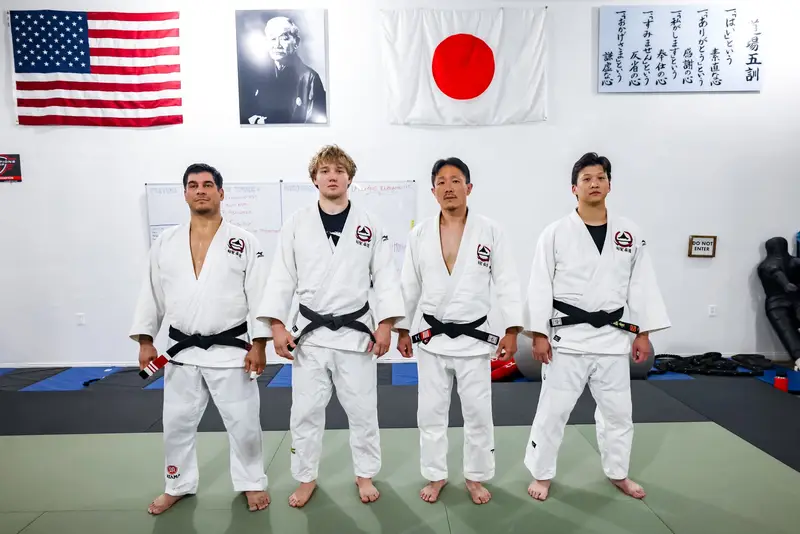
Kensei’s competition philosophy is not about sending the largest team possible.
It is about preparing athletes to represent their training well when they compete.
That is the meaning behind quality over quantity.
It does not mean smaller programs are automatically better. Larger judo clubs can offer major advantages, including greater numbers of training partners, deeper competitive teams, and athletes across many weight classes and experience levels.
The important distinction is that size alone does not determine coaching quality or athlete development.
A focused training environment can provide opportunities for individualized correction, greater accountability, and close attention to technical habits.
For parents considering youth judo in San Jose, those details matter.
Is your child learning sound fundamentals?
Are coaches identifying mistakes and correcting them?
Is your child being challenged at an appropriate level?
Are tournament results being used as feedback rather than simply as trophies?
Those questions can reveal much more about a program than a medal count alone.
The 98 external podiums are evidence of continued work, not a claim that Kensei outranks every Bay Area club per competitor. Public Smoothcomp pages do not provide a complete, comparable entry list for every opposing team at every event. Without that, “most efficient” and similar rankings would be guesswork.
A Rising Competitive Judo Program in San Jose
San Jose and the greater Bay Area are home to a strong judo community.
That benefits developing athletes.
Competing locally means encountering experienced coaches, disciplined competitors, different technical styles, and programs with long histories in the sport. Strong opposition raises the standard and gives athletes a more accurate picture of their development.
Kensei is continuing to establish itself within that environment.
For athletes looking for San Jose judo with a competitive pathway, the program offers an opportunity to develop fundamentals, experience live training, and eventually test those skills in Bay Area judo competitions.
Recent results suggest that Kensei athletes are increasingly capable of doing exactly that.
What Parents and Athletes Should Look for in a Judo Club
Families comparing judo classes in San Jose should look beyond tournament rankings.
Competition results matter, but so do the conditions that produce them.
A strong judo dojo in San Jose should emphasize technical fundamentals, safe and productive randori, disciplined training habits, appropriate conditioning, tactical awareness, and respect for teammates and opponents.
Parents should also consider how coaches respond when an athlete struggles.
Development is rarely linear. Athletes lose matches. Techniques stop working against stronger opponents. Confidence changes. Growth often comes from identifying those problems and returning to practice with a clearer purpose.
That is why individualized coaching and accountability are so important.
For junior and senior athletes seeking serious martial arts training in San Jose, the right environment should help them understand not only how to win, but how to improve.
Building Results One Athlete at a Time
Kensei Judo’s competitive rise is not simply a story about accumulating medals.
It is a story about development.
Public Smoothcomp records now verify 98 external podium finishes — 30 gold, 37 silver, and 31 bronze — across eleven outside tournaments, from the 2024 San Jose Open through the 2026 Bojuka Invitational. Kensei-hosted developmental shiai are left out of that total on purpose.
Those results provide evidence of progress without requiring exaggerated rankings or unsupported comparisons.
For Kensei, quality over quantity means focusing on whether athletes are becoming more technical, more prepared, more disciplined, and more capable each time they compete.
For parents, juniors, and senior athletes searching for competitive judo in San Jose, that is a standard worth considering.
Interested in seeing Kensei’s training environment firsthand? Book a free trial or walk in and speak with the coaching team about recreational and competitive judo programs in San Jose.
Frequently Asked Questions
Does Kensei Judo have a competitive judo program?
Yes. Kensei athletes participate in outside competition, including regional and national events, while the program continues to emphasize technical development, preparation, and long-term improvement.
How successful has Kensei been in recent competition?
Publicly available Smoothcomp results verify 98 podium finishes in outside competition, including 30 gold, 37 silver, and 31 bronze. Those figures come from eleven external tournaments. Kensei-hosted developmental shiai are excluded from that total.
Is Kensei Judo suitable for beginners?
Judo competition is only one part of development. Beginners can focus first on fundamentals, movement, falling safely, throwing techniques, groundwork, and controlled live training before competition becomes appropriate.
Why consider results per competitor instead of total medals?
Total medal counts are influenced by team size. A club sending more competitors naturally has more opportunities to medal. Looking at results relative to participation can provide additional context, although complete entry data is needed before making precise comparisons between clubs.
What should parents look for in youth judo in San Jose?
Look for qualified coaching, strong fundamentals, a safe training environment, appropriate challenges, individualized feedback, positive team culture, and a clear pathway for athletes who eventually want to compete.